

For Frontline Services
Every woman you support needs
something different.
Across a service, that can mean holding current, practical knowledge across abuse,
housing, finances, children, legal proceedings, and employment, often all at once.
63.5%
of domestic-abuse organisations report staff struggling with increased, more challenging workloads.512
That pressure makes it harder to give every woman the depth of support her situation needs, exactly when services are being asked to do more with less.
See how we can work togetherWhen Support Becomes Harder To Deliver
Meeting those different needs creates demands across the support you provide.
Supporting women with different circumstances means drawing on knowledge, information, resources and onward routes. Because abuse can affect different areas of her life, the support she needs can span several services. Routes onwards can be hard to navigate. And frontline teams are working under significant demands on their time and capacity.
53%
of clients entering outreach services had an identified mental-health need alongside the abuse they were experiencing.450
35%
of survivors said accessing help was easy or straightforward. Fewer than half accessed the community-based support they wanted.327
63.5%
of domestic-abuse organisations reported staff struggling with increased and more challenging workloads.512
Where The Pressure Builds
Four challenges sit behind those demands.
Each of these pressures creates a different challenge for the service, and affects how easily the right support reaches the woman who needs it. For Harbour Lights Community, four areas are particularly relevant to where we can help:
-
The significance of post-separation abuse can become clearer when behaviours are considered together.
Post-separation abuse can continue across finances, children, legal proceedings, communication, employment and other parts of a woman’s life. Research shows that these tactics can overlap and have a cumulative effect, creating patterns of control, intrusion and entrapment that are harder to understand when each behaviour is viewed separately.506, 528
Seeing those connections can provide a fuller picture of the harm being experienced and give useful context for conversations about risk, support and what may need further exploration with a trained professional.506, 528
Operational impactWhen different behaviours are being addressed in different parts of a woman’s situation, their cumulative significance can be harder to keep in view. Bringing them together gives the woman and the professionals supporting her a clearer picture of the wider context around the support already underway.
-
The abuse may be only one of several problems a woman is dealing with.
In SafeLives’ 2024–25 outreach dataset, 53% of clients had an identified mental-health need when entering support, 36% had a social and community-support need and 32% had a housing need.450
Alongside these needs, post-separation abuse can affect areas including finances, children, work, housing and legal proceedings.506, 528
Operational impactEach woman’s circumstances can bring a different combination of issues into view. The relevant information may therefore sit across several subjects, creating a need to bring those pieces together around the support already being provided.
-
Knowing that help is needed does not necessarily make the right help easy to find.
The Domestic Abuse Commissioner reports that fewer than half of survivors accessed the community-based support they wanted, while only 35% said accessing help was easy or straightforward. The Commissioner also identifies survivors being left to navigate complex systems themselves.327
-
No organisation can personally provide specialist expertise on every issue affecting every woman.
Women’s Aid found that 39.1% of domestic-abuse organisations delivered part of their service without dedicated funding in 2024–25. Among organisations delivering unfunded provision, 30% reported reduced capacity to support women with more complex needs.574
Research in social work and social care also identifies limited time and difficulty locating accessible, relevant evidence as barriers to putting research into practice.575, 576
Operational impactLimited staff time and specialist knowledge can make it harder to provide the same breadth of researched information alongside direct support. Services need ways to extend what women can access without requiring every worker to research every issue from scratch or move beyond their professional role.
The pressures are not unique to domestic-abuse services. Across the wider voluntary sector, rising demand and financial pressure are also affecting how frontline services deliver their work.577 Harbour Lights works alongside existing frontline expertise, helping services make specialist information more accessible and easier to use across the team.
Where We Can Help
Harbour Lights Community helps make each of them easier to meet.
01Recognition
Add a way for women to explore whether separate experiences may be connected.
Women can arrive with individual experiences that make sense on their own: a problem with money, continuing contact, something involving the children, harassment or another issue that has brought them to your service.
Sometimes the connection between those experiences only becomes visible when they are looked at together.240, 581
Constellation gives women a private way to do that.
It takes them through individual behaviours and shows where those behaviours may form part of a wider pattern. Where a possible pattern is identified, it points towards information that can help them understand it further and encourages them to consider discussing what they are experiencing with a trained professional.
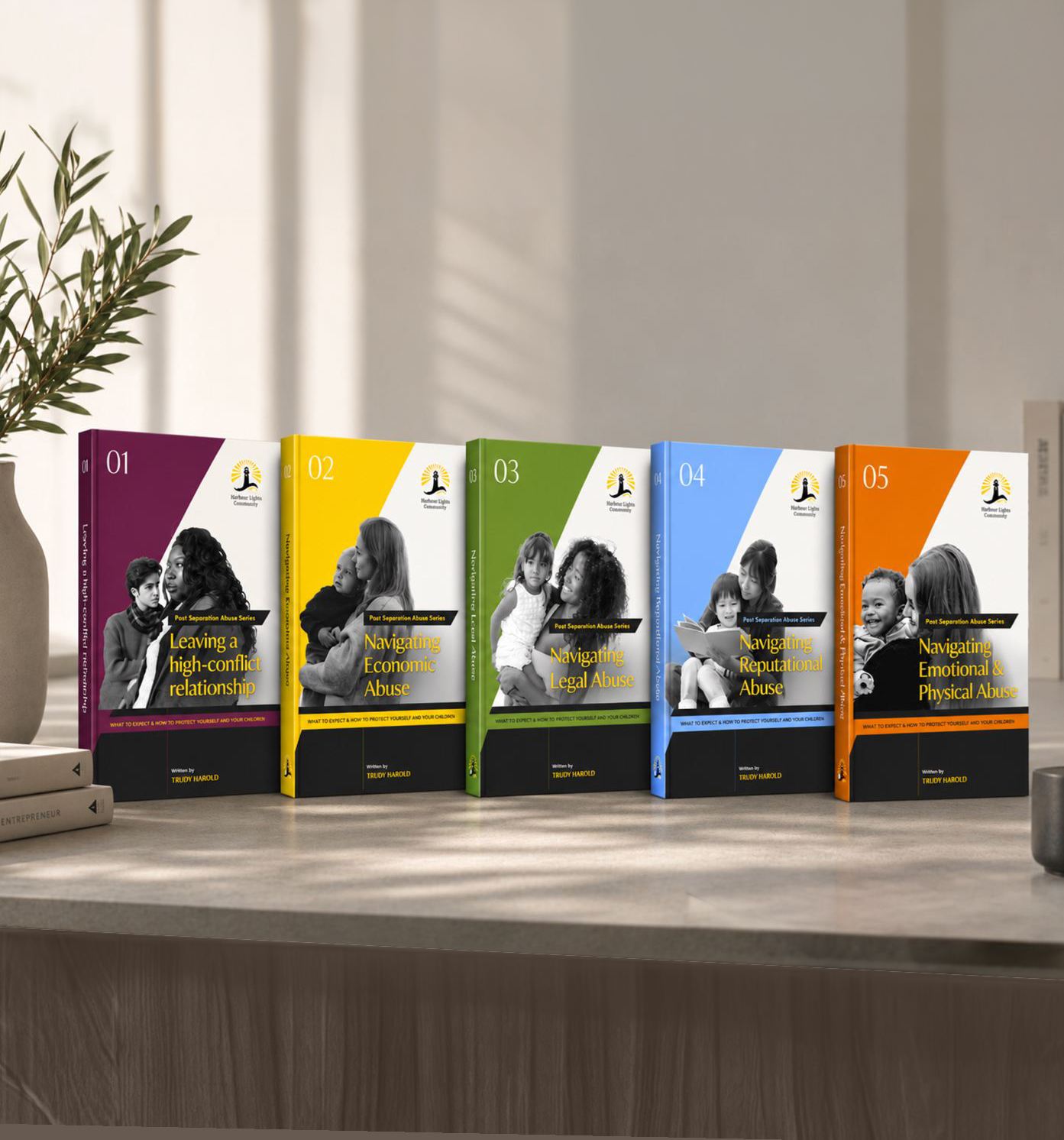
The Guides sit alongside that process, providing more detailed information about particular behaviours, tactics and their possible effects.
Together, they add a route to recognition that can sit alongside the professional support you already provide.
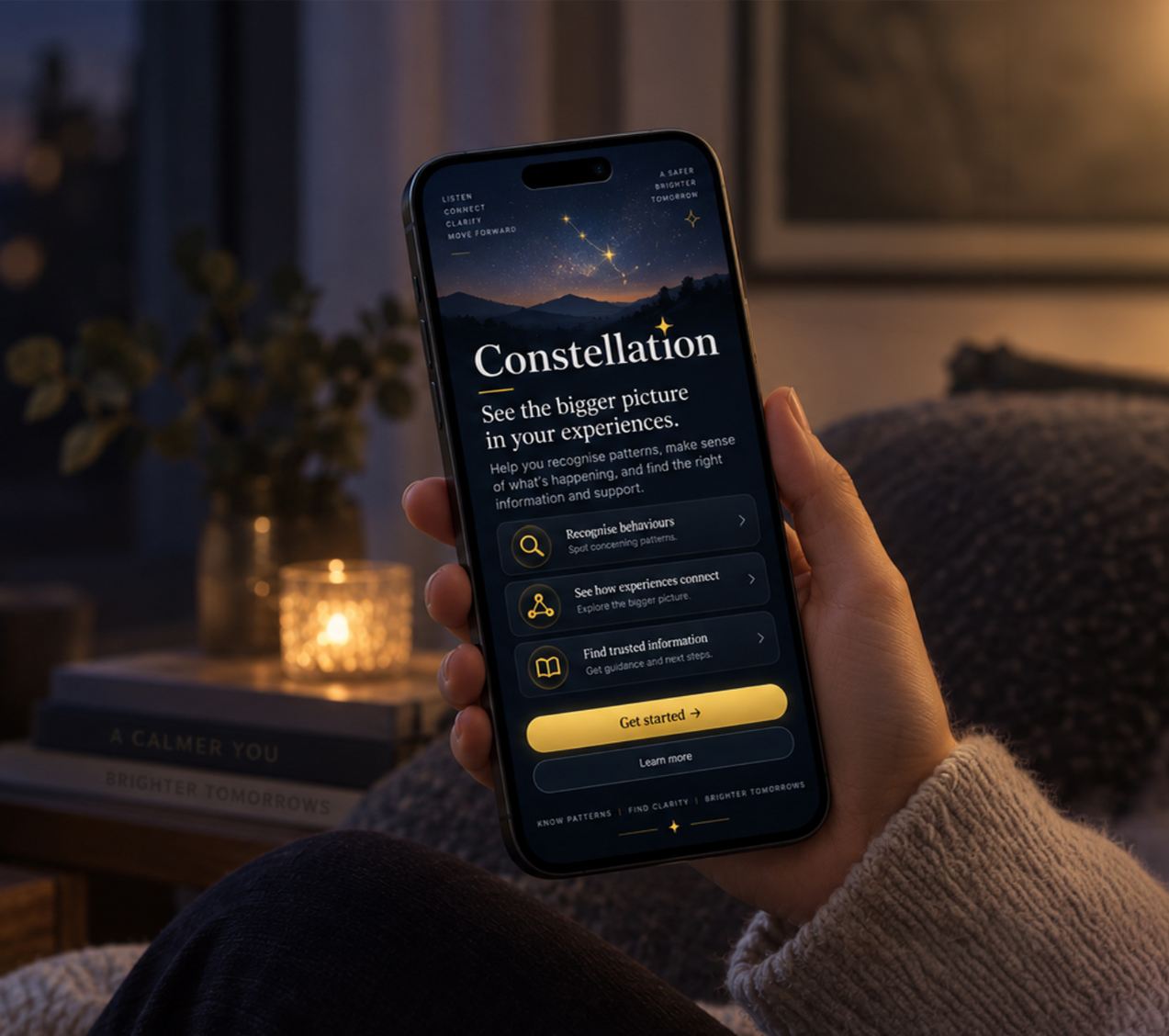

Explore a possible pattern.
Constellation helps women explore individual behaviours together and see whether they may form part of something wider.
Explore Constellation
Understand the behaviours in more detail.
The Guides explain particular tactics and behaviours, their effects and the issues that may sit around them.
Explore the Guides02Different Circumstances
Built Around Her Unique Circumstances
No two women are facing exactly the same combination of issues.
Housing can sit alongside debt. Child arrangements can sit alongside continuing contact. Employment, legal proceedings, finances and other pressures often overlap, making sense of it all can mean drawing on several different areas of knowledge at once.450, 506, 528
Lumina draws on the research and information held across Harbour Lights Community to build a single, bespoke guide around the specific issues she’s facing, bringing connected subjects together in one place, and changing as her circumstances do. Where more detail helps, the Knowledge Centre and full guides are there to go deeper.
Your understanding of her situation, alongside Harbour Lights’ research, becomes something focused, relevant and ready to use.
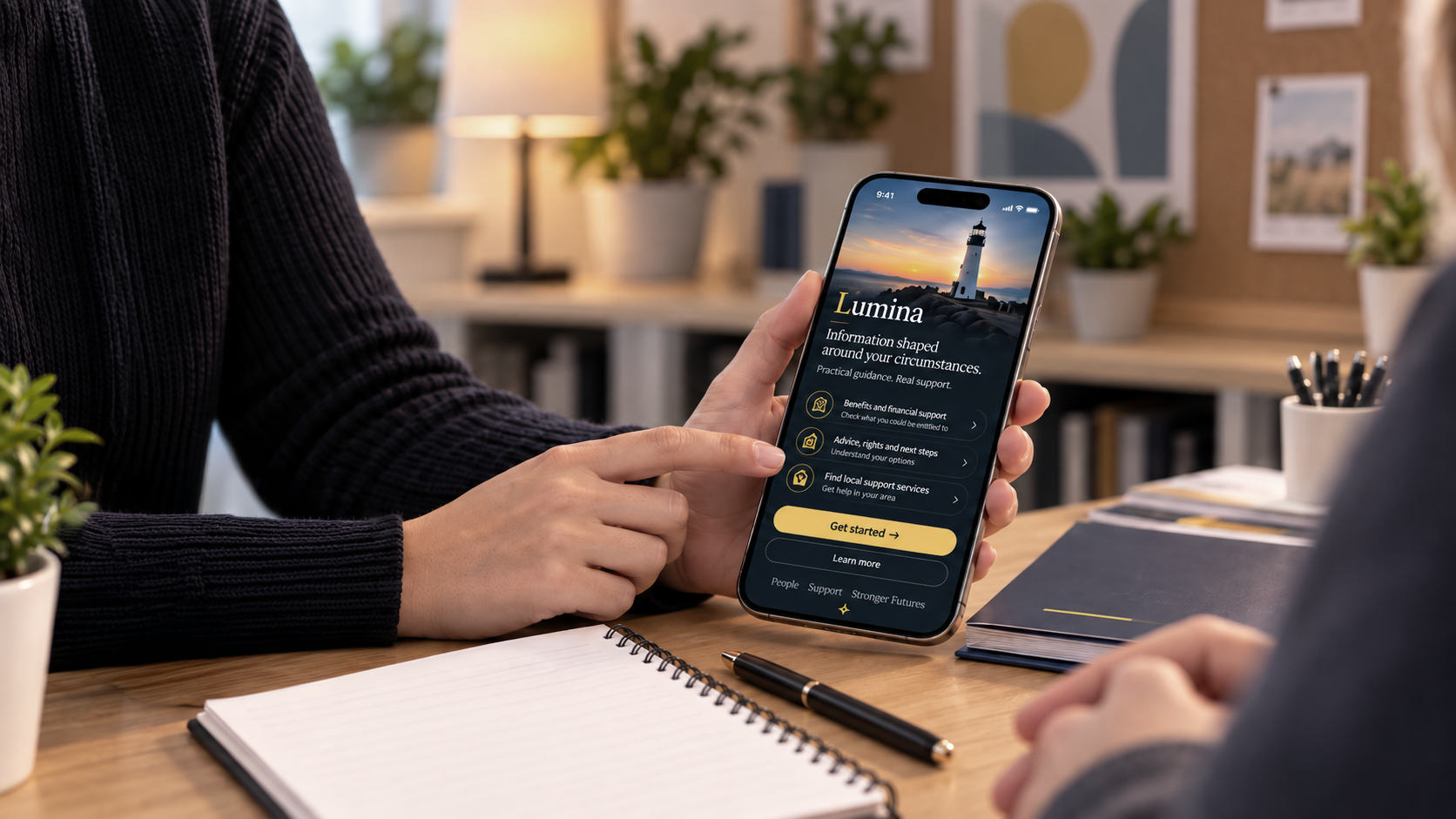

Turn a wide body of information into a specific guide built around her experiences.
Lumina draws from across Harbour Lights Community to create a guide around the particular combination of issues a woman is dealing with.
It brings the relevant information into one place, giving her something more closely shaped around her circumstances without your team having to find and assemble those different pieces each time.
Explore Lumina
Give each issue the depth her circumstances call for.
The Knowledge Centre and Guides provide more detailed information on individual subjects, bringing together research, professional guidance and practical information around the specific issues she is dealing with.
They give women and frontline workers a deeper body of information to draw on where a particular issue needs more exploration.
Explore the Knowledge Centre03Navigating Support
Bring relevant information, practical next steps and onward routes closer together.
The support surrounding domestic abuse can extend across many different parts of a woman’s life.
The Domestic Abuse Commissioner’s mapping research found survivors seeking help across counselling and mental health, housing and safety, Family Court and police processes, money and debt, social services, employment, immigration and other areas. It also found that the support someone needs can change over time and according to their circumstances.311
Access across those areas varied considerably. Among survivors who wanted particular types of support, 45% accessed counselling or therapeutic support, 37% accessed mental-health support, 29% received help speaking to social services, 27% received help with money or debt and 23% received help to stay in work or find a new job.311
Harbour Lights Community brings relevant information, practical guidance and onward support together around a particular issue.
A woman can move from understanding a problem, to practical information about what she may want to consider, to researched organisations and services relevant to that issue. Those connections remain available as her circumstances change or different needs come into view.
For services, that creates a wider body of researched information and onward routes to draw on around the support already underway.
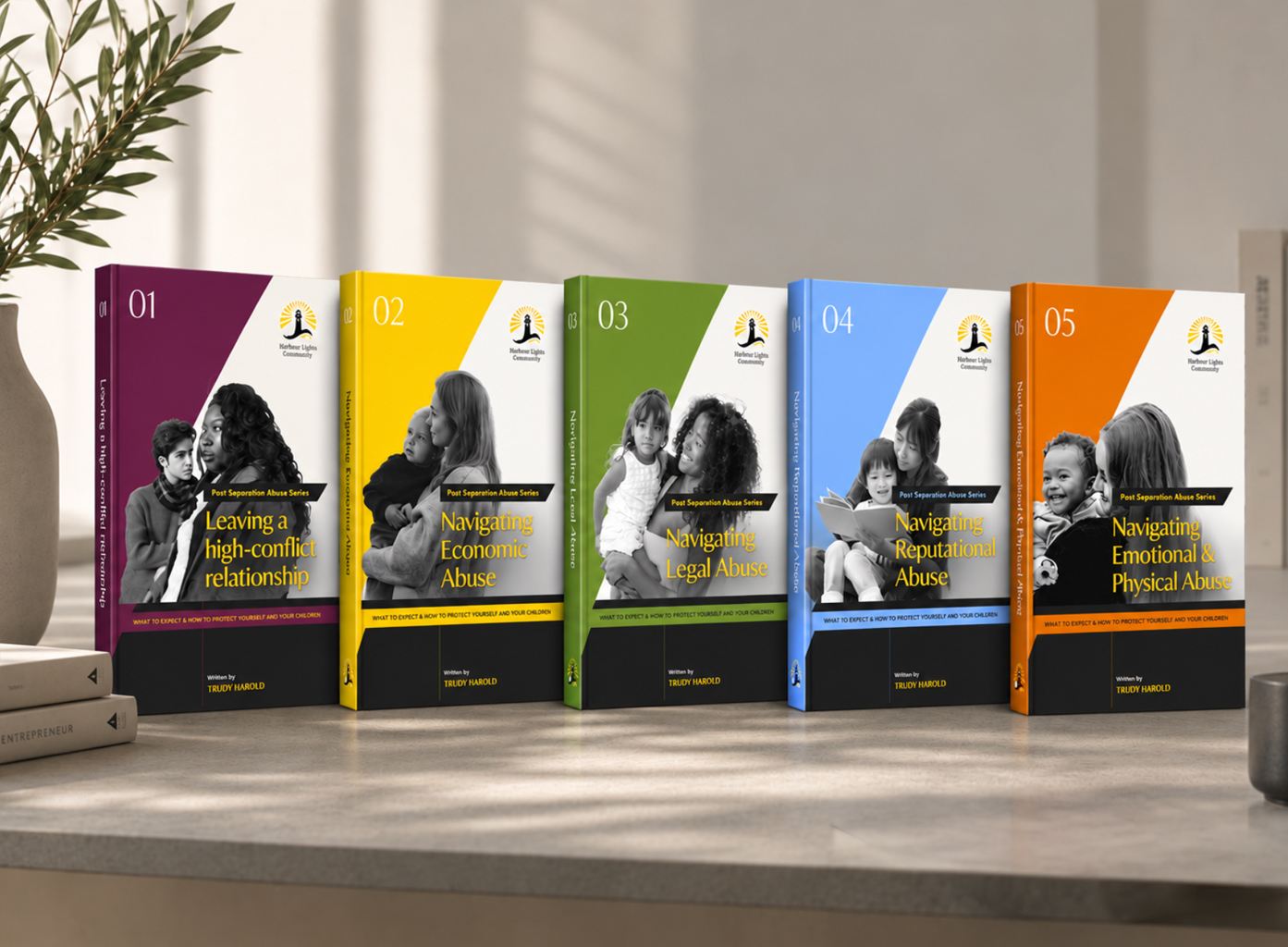
Understand more of what sits around the problem.
The Guides bring together research, professional guidance and practical information around individual issues, including the behaviours involved, their possible effects and the wider circumstances that can sit around them.
They give a woman a fuller body of information to explore around the problem she is dealing with, while giving frontline workers researched material to draw on when that issue comes into the support already being provided.
Explore the Guides
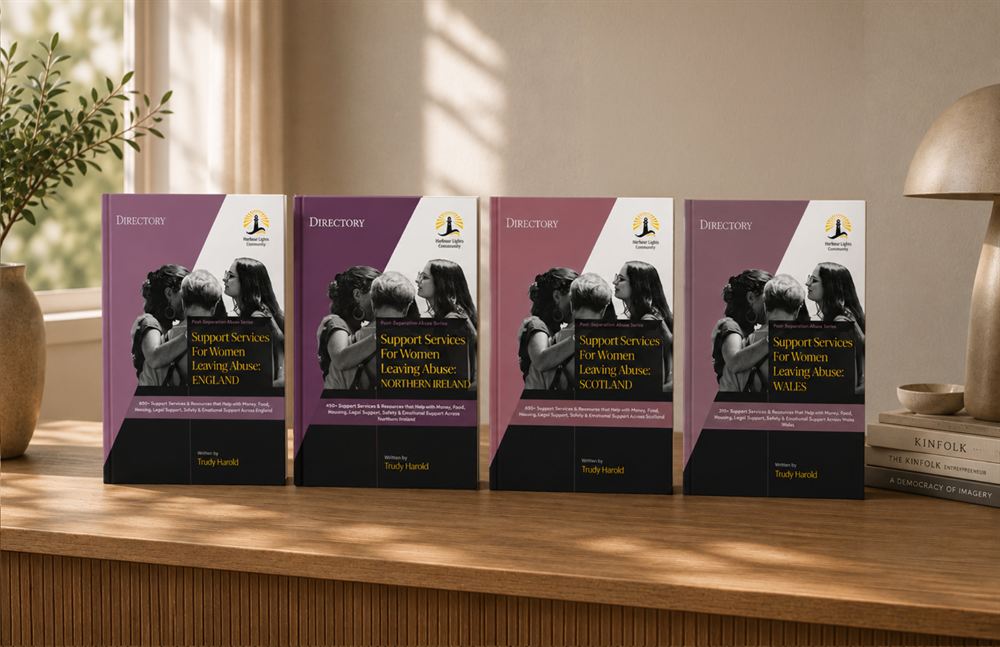
Keep relevant onward routes connected to the issue.
The Directories bring together researched organisations, services and programmes relevant to different areas of need, so the route onwards sits alongside the information that explains the problem.
As different circumstances come into view, such as housing, finances, legal processes, children, employment or specialist domestic-abuse support, women and frontline workers have additional researched routes to draw on without beginning a new search from scratch each time.
Explore the Directories04Capacity & Expertise
Keep current information and practical resources within reach of your frontline team.
Post-separation abuse can bring together issues across law, housing, finances, children, employment, technology, safeguarding and other areas.
Keeping across the research, legislation, official guidance and specialist-sector knowledge surrounding all of those subjects takes time. So does finding, checking and bringing together the relevant information when a particular issue comes into the support already underway.
That sits within an already pressured working environment. Women’s Aid found that 63.5% of responding domestic-abuse organisations reported staff struggling with increased and more challenging workloads.512 Research across social work and social care also identifies lack of time as one of the principal barriers to finding and using research in practice.575, 576
Harbour Lights Community takes on more of that information work.
We research and organise the subjects surrounding post-separation abuse, keep the evidence under review, and update the information as research, legislation and guidance change.
That work feeds into different kinds of resources: the underlying evidence when you want to check a source, concise information when you need to catch up on a subject, and practical resources ready to use with women at different points in their post-separation journey.
The most relevant current information stays closer to the frontline work it is there to support.
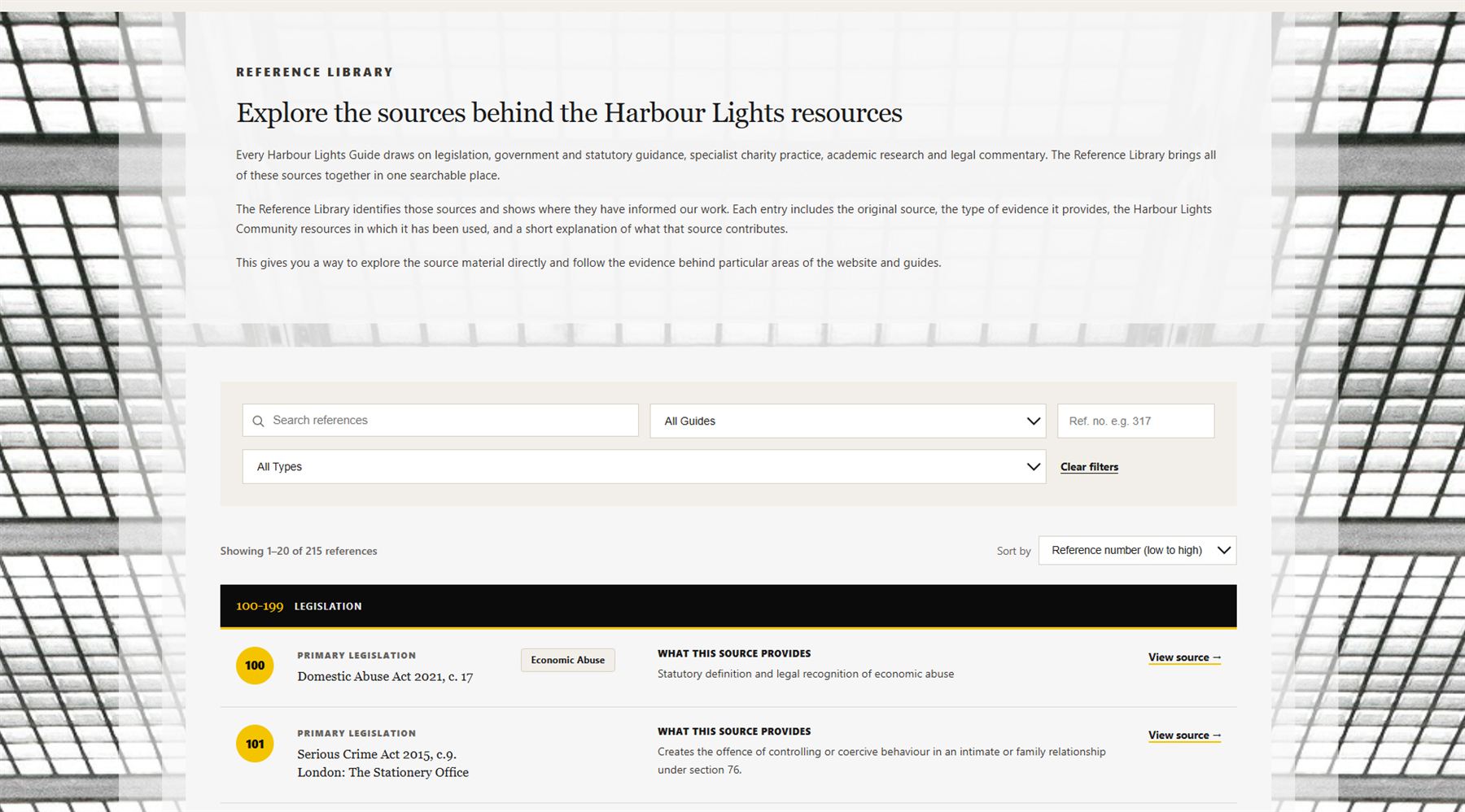



Start with evidence that has already been found and checked.
The Reference Library brings together peer-reviewed research, legislation, official guidance, specialist reports and other authoritative sources across our subject areas.
The evidence base is maintained and updated as research, guidance and legislation change, giving frontline workers a current, curated starting point, whether they’re checking the evidence behind an issue or exploring something unfamiliar.
It reduces the need for each new question to begin with finding, checking and appraising sources from scratch.
Explore the Reference Library
Catch up on a subject and keep up with what is changing.
Articles turn that evidence base into focused updates on research, policy, guidance and legislation.
They give frontline workers a quick way into an issue as it comes up, refreshing existing knowledge, getting up to speed on something unfamiliar, or seeing what’s changed since they last dealt with it.
The full research remains available in the Reference Library underneath, when greater depth or source checking is useful.
Explore the Articles
Have practical information ready when it is needed.
Checklists turn research and guidance into practical considerations and actions for the situations women encounter.
They draw out what’s useful at different points in her post-separation journey.
That gives frontline workers researched, action-oriented material to draw on or share, without creating a new resource for every issue that comes up.
Explore the ChecklistsHow It Fits
Add more information and resources without adding more work.
Harbour Lights Community is designed to sit alongside the support you already provide. We maintain the research, legislation, guidance and specialist information behind the resources, keeping it under review as the evidence changes.
Your team can draw on the parts that are useful to your service, whether that is Constellation, Lumina, Guides, Checklists, Directories or the wider Knowledge Centre, without having to build and maintain the same body of information internally.
You retain the relationship, expertise and professional judgement. We take on more of the research and resource work around it.

“Useful information,
when it’s needed.”

Working Together
See where Harbour Lights Community could fit alongside your service.
Tell us about the women you support, the resources your teams already draw on and where additional information or tools would be useful.
We can look together at which parts of Harbour Lights Community are relevant and how they could sit alongside the support you already provide.
Talk to Harbour Lights CommunityDifferent services.
A shared goal.
A safer future for women.