
Trust, Evidence & Methodology
The Evidence and Review Behind Our Resources
Our resources combine peer-reviewed research, published studies, UK legislation, government publications, women’s organisations’ guidance and lived experiences. Our resources are supported by legal review, traceable references and ongoing updates.
Our assurance framework provides organisations with confidence in the quality, reliability and responsible use of our information.
01 — Information grounded in established sources
Our resources draw on research, legislation, and professional guidance.
The factual information in Harbour Lights Community’s resources draws on a broad evidence base: peer-reviewed research and other published studies, UK legislation and government publications, and guidance from recognised specialist and frontline organisations working on domestic abuse and related issues.
We chose each source for its relevance, authority and suitability.
Our own research has also contributed to the development of the resources. We interviewed 26 women about their experiences of abuse. These interviews identified the topics the guides cover, the questions women want answered, the information they need and how best to present it.
Factual claims and countermeasures were supported by published external evidence rather than established from our interviews alone. All of the external sources are publicly available. We provide links to the material used in our Reference Library so organisations, professionals and readers can examine the evidence for themselves.
02 — From Evidence to Practical Resources
Different Types of Evidence Contribute
to Different Parts of The Picture
We use multiple types of evidence; each is needed to create comprehensive, accessible resources that deepen understanding of abuse and empower women to make informed decisions.
How evidence shapes our resources
Hover and click
to read more.Tap to read more.
Peer-reviewed research
What it is: Academic studies from universities, research institutions and other specialist organisations, published in scholarly journals following independent expert review to assess the quality of their methods, analysis and findings.
How we use it: Evidence on abuse, its impact and the effectiveness of different responses.
Peer-reviewed research
We use peer-reviewed research to explain abuse, its impact and the ways women can respond. We use it because it has undergone scrutiny by independent experts, giving us confidence in the reliability of its findings. This ensures the resources have a strong foundation that women can rely on when making decisions about their circumstances.
Published research and evidence
What it is: Relevant studies, reports and other established research from universities, research institutions, public bodies and other credible sources.
How we use it: Broader evidence on abuse, its impact and effective responses.
Published research and evidence
We use other published research to build a more comprehensive understanding of abuse by drawing on evidence from different disciplines and perspectives. Reports and studies from research institutions and public bodies help us understand how abusive tactics affect different areas of women’s lives. They also provide insight into how children are affected and how organisations respond to abuse. Together with peer-reviewed research, these sources help us understand the wider complexity of abuse and develop resources that reflect the different challenges women face.
Legislation and government sources
What it is: Law, statutory guidance, government publications and official information.
How we use it: Legal context, rights and processes.
Legislation and government information
We use legislation and government sources to ensure the legal information in our resources is grounded in authoritative material. These sources help us explain women’s rights, the responsibilities of organisations and how relevant legal processes work. This gives women a clearer understanding of the protections available to them and how the law may help them respond to their circumstances.
Specialist and frontline organisations
What it is: Guidance, recommendations and practice-based information from specialist organisations.
How we use it: Practical actions, preparation and specialist guidance.
Organisational and specialist recommendations
We use guidance from specialist and frontline organisations to bring practical knowledge from those working directly with women affected by abuse into our resources. Women’s organisations have developed expertise through years of supporting women and learning from their experiences. We draw on their recommendations to identify practical actions, necessary preparations and sources of specialist support. This knowledge informs our guidance and checklists, helping women prepare for difficult circumstances and make more informed decisions about how to respond.
Our research with women
What it is: Qualitative insight into women’s questions, experiences and information needs.
How we use it: Relevance, lived experience and practical perspective.
Primary research with women
We conducted our own research because we wanted to understand what information women need when experiencing abuse, the questions they want answered and how they prefer that information to be presented. Through interviews with 26 women who had experienced post-separation abuse, we gained insight into their experiences and the challenges they faced. Their perspectives helped shape the topics and structure of our resources. This allows us to organise existing knowledge around women’s needs, making relevant information easier to find and understand when they need it most.
03 — Our Assurance Framework
Evidence, traceability, legal scrutiny and clear usage form the standard behind our resources.
Our assurance framework brings together six elements designed to make the information we provide robust, transparent and appropriately used.
Robust Data Sources: Our information draws on a broad evidence base that combines published research, authoritative sources, specialist expertise and women’s lived experiences. Each source is selected for its relevance, reliability and contribution to the quality of our resources.
Rigorous Review & Verification: Our guides have been reviewed by a Family Law legal team, providing an additional layer of external scrutiny over the legal information they contain. We also provide traceable references, linking the sources through our Reference Library so they can be examined independently.
Governance & Maintenance: We set clear limits on how our resources should be used. They are designed to support understanding and informed decision-making, not to determine what has happened in an individual case or replace legal advice, professional assessment, safeguarding procedures or specialist support.
We also maintain the information over time. Directory information is reviewed each January, relevant information feeds are reviewed daily, and information is reviewed when a user alerts us to a possible change or error.
Together, these six elements form the assurance framework behind our resources:

How do we decide what information to rely on and how do we check it?
Trustworthy information depends on whether the source is appropriate, authoritative, current and capable of being checked.
Our assurance process considers the quality and suitability of the evidence we use, the way our own research was conducted, whether information can be traced back to its source, and how it is kept under review.
We do not treat all sources as equivalent.
The sources we use are considered according to the type of information they are being asked to support. Depending on the subject, this may include peer-reviewed research, legislation, government publications, recognised professional or specialist guidance, and primary research conducted directly with women who have experienced post-separation abuse.
For external sources, we consider factors including authority, relevance, methodological quality, currency and applicability.
Where possible, factual information is supported by established and authoritative sources, and we distinguish between research evidence, legal information, specialist guidance and lived-experience evidence rather than presenting them as though they carry the same type of authority.
Our primary research was conducted directly with women who had experienced post-separation abuse to understand their experiences, questions and information needs. Given the small sample size, we used the findings primarily to shape the topics, structure and presentation of our resources. Factual claims and recommended countermeasures were supported by external published evidence.
Yes.
The external sources supporting our resources are recorded so that the evidence behind factual information can be identified and reviewed.
Our Reference Library brings those sources together and, wherever possible, links directly to the original research, legislation, government publication or organisational guidance. This allows readers, professionals and organisations to examine the underlying material rather than relying solely on HLC’s presentation of it.
Research, legislation, guidance and services can change, so our information is kept under review rather than treated as permanently complete.
Information across the guides, websites, applications and directories is reviewed each January. Relevant information feeds are reviewed daily, and information is also reviewed when we become aware of a significant change or when a user alerts us to a possible error or update. Where a review identifies that information is no longer accurate or sufficiently current, the relevant resource is amended.
Important resources can also display a last reviewed date, so readers can see when the information was most recently checked.
Together, these checks help ensure that the information we publish has an identifiable basis, is used within appropriate limits and remains open to independent scrutiny.
04 — Transparency and corrections
Our information is open to scrutiny, correction and review.
Publishing evidence-based resources means making the evidence behind them visible, and giving a clear route to question anything that appears wrong, unclear or out of date.
The sources belong to their authors. How we explain and interpret them is our responsibility.
The evidence can be checked
Our sources are open to independent review.
Every statement in our resources is cited. Each citation links to its entry in our Reference Library, where the source is summarised alongside a direct link to the original material, wherever one is available. Some sources may sit behind a paywall or subscription.
This lets you go from any statement to the evidence behind it, and check it yourself rather than relying only on HLC’s interpretation.
Explore the Reference Library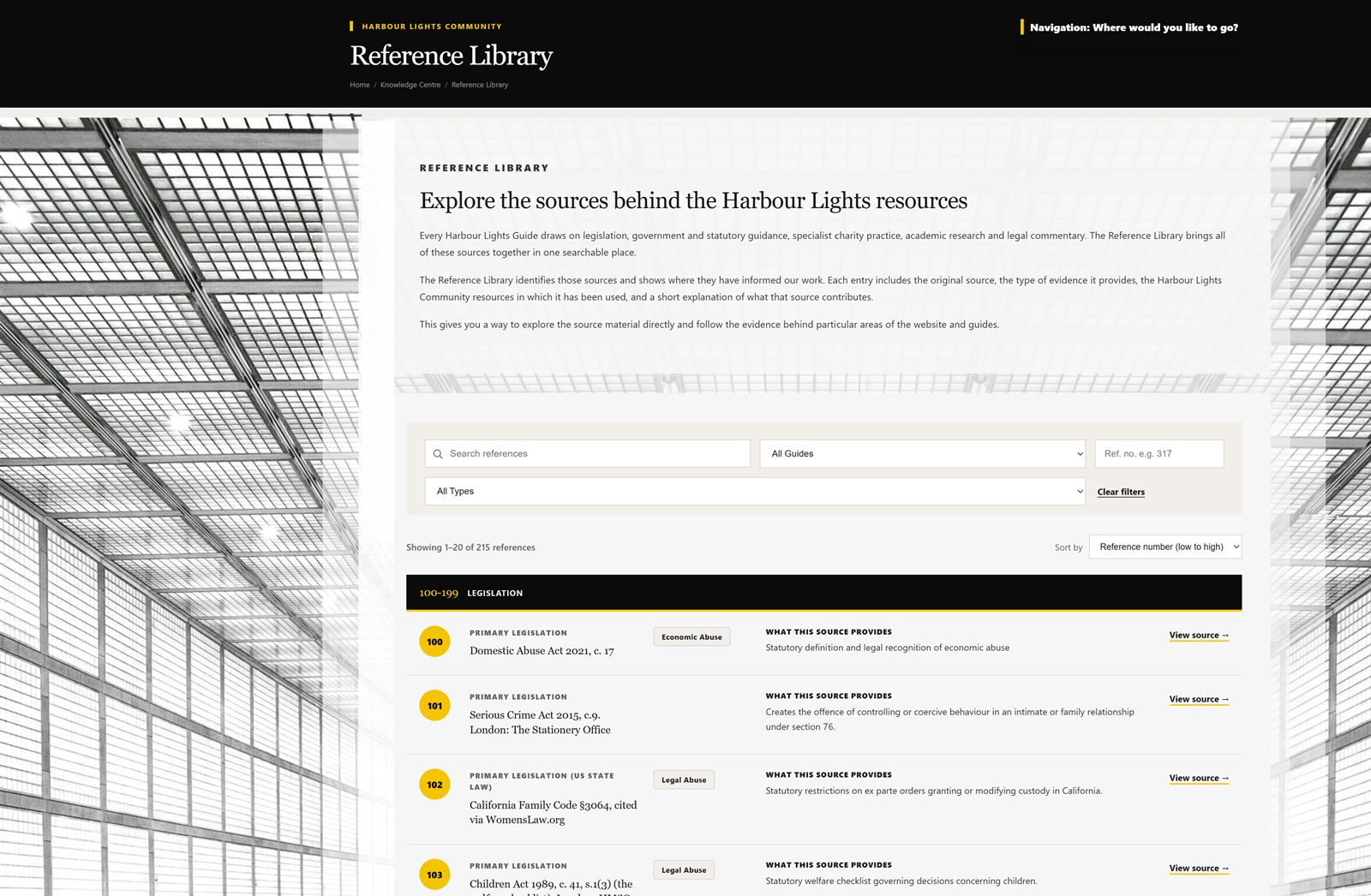
Corrections and updates
Spotted something that doesn’t look right? We want to know.
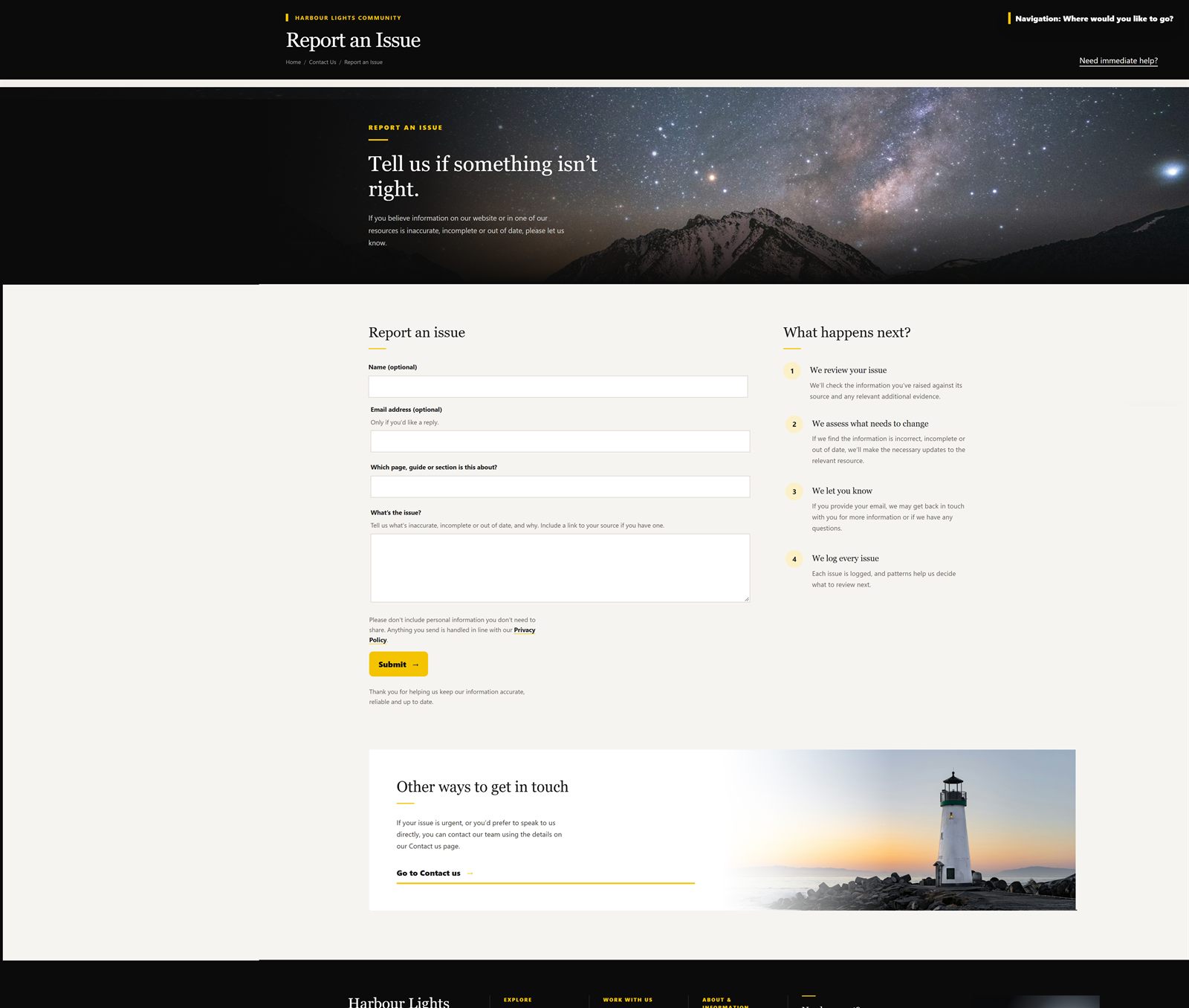
If something in one of our resources is inaccurate, unclear, incomplete or out of date, use our Report an Issue form and tell us which page, guide or statement it concerns.
We check whether our wording, and any interpretation we’ve applied, is supported by the original source and other relevant evidence, and correct it where needed. If you’ve left an email address, we’ll let you know the outcome. If the information stands, we’ll explain why, and we’re always open to new evidence.
We also review our resources on a set schedule, so changes in law and guidance are picked up even when no one reports them.
How we use your details: Privacy Policy
Our resources provide general information and are not legal advice for individual situations.

05 — Using Our Work
Permissions and licensing
Harbour Lights Community publishes original resources, frameworks and professional materials protected by intellectual property rights. Certain names and materials are protected as trade marks, and some intellectual property is licensed for use by Harbour Lights Community.
Reproducing, adapting, republishing, distributing or incorporating Harbour Lights materials into training, publications, organisational resources, products or services requires prior written permission and may require a paid licence.
For licensing and permissions, contact contact@harbourlightscommunity.co.uk.
Company details (publish once incorporated): Harbour Lights Community is a limited company registered in England and Wales. Company number: [ ]. Registered office: [ ]. Page last reviewed: 12 March 2025.