

Checklists & Practical Resources
Help women prepare for specific challenges and decisions.
Give your team practical checklists they can work through with women or share for them to use independently. Each checklist breaks down a specific situation into manageable steps, helping women prepare, organise important information and consider what to do next.
Practical resources for different situations
We are developing a collection of approximately 30 practical checklists for organisations supporting women experiencing abuse.
The collection expands on the seven checklists freely available on our public website, covering a wider range of situations at different stages of abuse.
Each checklist focuses on a specific challenge, breaking practical considerations into manageable steps. Resources cover different stages, including before leaving, after separation and situations relevant to both.
Areas covered

Leaving
Preparing essential documents, belongings and arrangements for leaving a relationship.

Money
Organising finances, protecting accounts, managing debts and accessing financial support.

Personal Safety
Planning for personal safety, including home security, daily routines and safety after separation.

Evidence & Records
Recording incidents, preserving relevant information and organising documentation safely.

Technology
Protecting phones, online accounts, social media, location information and connected devices.

Children & School
Preparing arrangements for children’s safety, school communication and practical needs.

Court & Legal Proceedings
Preparing documents, organising information and considering safety arrangements for court.

Housing
Exploring accommodation options, preparing for a move and considering ways to remain safely at home.

Pets
Planning care arrangements for pets when preparing to leave a relationship.
Where Checklists Fit into Her Journey
Helping women manage complex preparations when the demands are greatest.
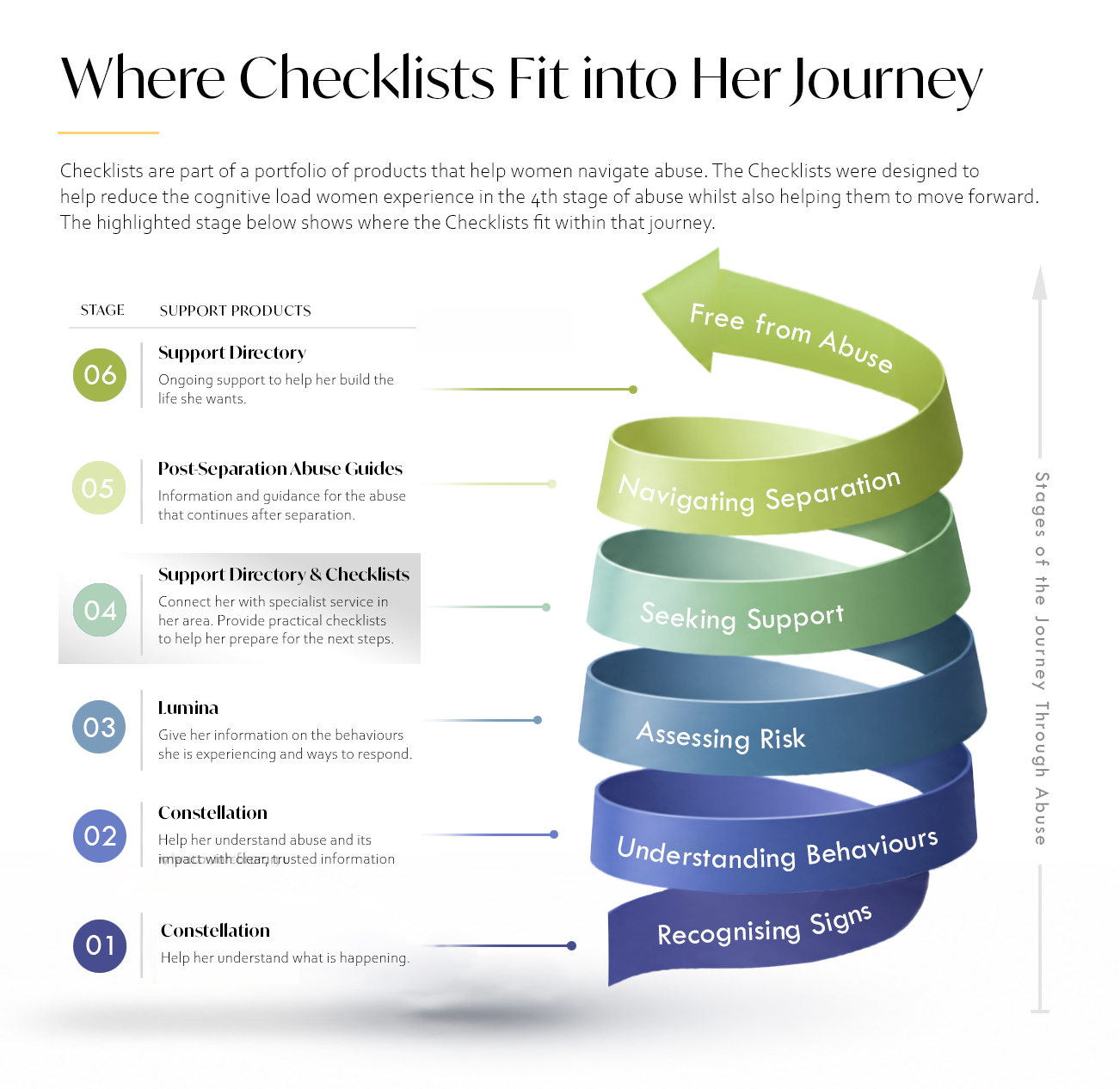
Checklists were designed particularly for the 4th stage of abuse called Seeking Support. During this stage, women may need to make decisions and practical arrangements involving their safety, finances, housing, children and future, often while experiencing on-going abuse.
Research has identified difficulties with planning and decision-making among some women who have experienced intimate partner violence.545 Separate studies have found that checklists can improve task accuracy and reduce psychological strain, while external reminders can be particularly helpful when memory demands are high.766, 767
By organising preparations into smaller, manageable steps, HLC’s checklists help women identify what needs attention, keep track of important information and avoid overlooking practical considerations. They can work through the steps at their own pace, without having to remember and organise everything at once.
For practitioners, the checklists provide a ready-made structure for discussing priorities, identifying additional support needs and helping each woman consider what is relevant and safe for her circumstances.
Where Checklists Fit into Her Journey
Checklists are part of a portfolio of products that help women navigate abuse. The Checklists were designed to help reduce the cognitive load women experience in the 4th stage of abuse whilst also helping them to move forward. The highlighted stage below shows where the Checklists fit within that journey.
Access the checklists through the HLC platform
The professional checklist collection will be available to practitioners in the signed-in area alongside Lumina, making resources easy to find and use when supporting women.
Let’s Work Together
Better information. More support. Stronger outcomes.